Best Permanent Roofline Lights in Canada: 2026 Guide
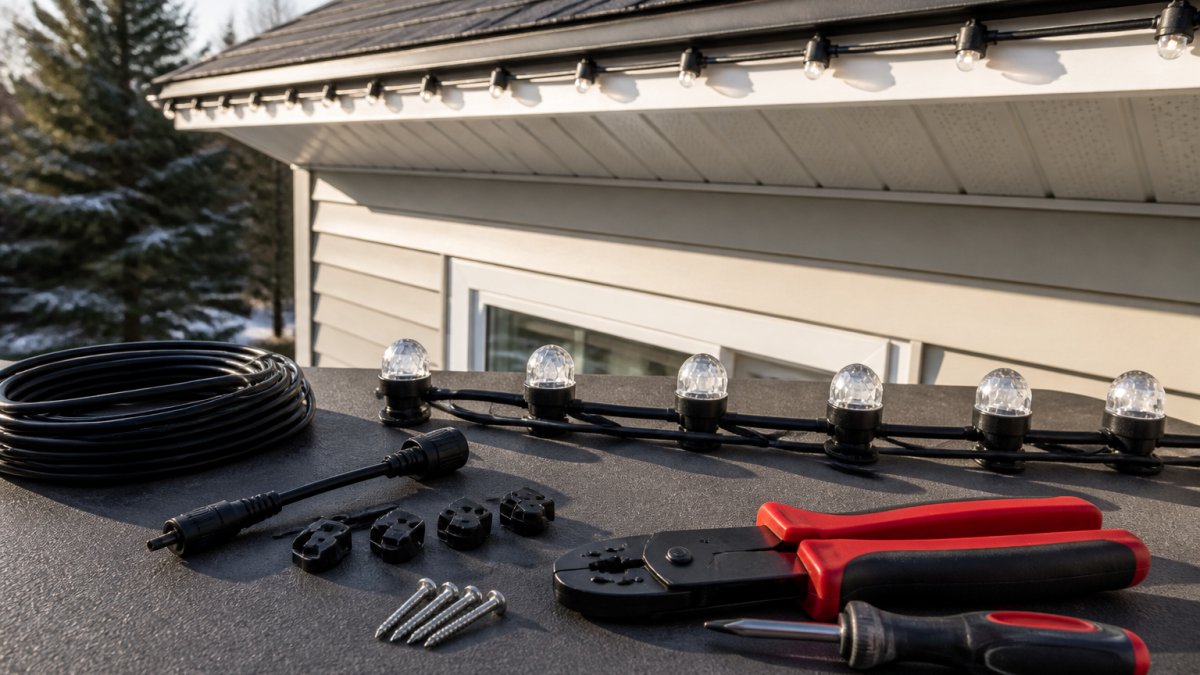
Compare the best permanent roofline lights for Canadian winters. Learn costs, DIY vs professional installation, and smart features. Find your perfect fit.
Table of Contents
- What Makes Permanent Roofline Lights the Best Choice for Canadian Homes
- Permanent Holiday Lighting Cost in Canada: What to Expect
- Professional Grade Holiday Lighting Benefits for Homeowners and Businesses
- DIY vs Professional Permanent Outdoor Lights: Which Is Right for You?
- Key Features to Compare in Permanent Roofline Lights
- Installation Process and Cold-Weather Best Practices
- Warranty, Maintenance, and Support Considerations
- Frequently Asked Questions
Last Updated: September 28, 2026
What Makes Permanent Roofline Lights the Best Choice for Canadian Homes
Permanent roofline lights are a fixed, professionally mounted LED system that stays on your home year-round, replacing the annual climb-and-clip routine. For Canadian homeowners, the appeal is simple: one installation, then decades of holiday scenes, accent lighting, and everyday curb appeal at the tap of an app. StarLites Permanet Lights Inc. builds these systems for the freeze-thaw reality of Canadian winters, where cheap seasonal strands crack, fade, and slide off the fascia by January.
Cold-Weather Durability and IP Ratings
The IP rating is the single most important spec to check, and most buyers skip it. IP67 waterproof rating means the housing is dust-tight and survives temporary immersion, which matters when ice dams and freezing rain sit on your roofline for weeks. Anything below IP65 has no business on a Canadian exterior.
Permanent Holiday Lighting Cost in Canada: What to Expect
Pricing for permanent holiday lighting depends on roofline length, number of stories, access difficulty, and whether a dedicated circuit is required. There is no single sticker price, and any provider quoting one without a site assessment is guessing. What separates a useful quote from a vague one is whether the installer breaks the number into the same line items every time.
What actually drives the number:
- Linear metres of track and LED required for your roofline. Most single-family homes land between 30 and 60 linear metres once gables, dormers, and soffit returns are counted.
- Transformer and power supply unit capacity, sized to total lumen output and the longest continuous run before voltage drop forces a second injection point.
- Installation complexity: single-story soffit access versus a steep two-story gable, or a roofline that needs a lift rather than a ladder.
- Smart lighting controller and app integration tier, including whether the controller supports RGBIC lighting per segment or only whole-run colour.
- Electrical work, if a dedicated circuit or an exterior GFCI-protected receptacle is needed.
- Permits and inspection, where the local authority having jurisdiction requires them for new exterior circuits.
Upfront Investment vs Long-Term Savings
The honest math: a permanent system costs more upfront than a big-box seasonal kit. It wins over time. You stop buying new strands every year, stop paying someone to hang and remove them, and stop replacing failed sets mid-season. Energy-efficient LEDs draw a fraction of what older incandescent strands pulled, so running costs stay low across a long season.
What a Quote Should Include
A quote that is worth signing should state, in writing:
- The IP rating of the fixtures and connectors, not just the strip
- The LED type (RGB vs. RGBIC lighting) and the colour temperature range
- The track mounting profile material and its UV rating
- The transformer location and whether it is accessible for service
- The warranty term for LEDs, controller, and transformer separately
- Whether permits, inspection, and disposal of old strands are included
Professional Grade Holiday Lighting Benefits for Homeowners and Businesses
Professional grade holiday lighting benefits come down to three things: it holds up, it looks intentional, and it runs itself. Commercial-grade LEDs and track mounting profiles are built to stay mounted through wind, ice, and snow load, which is where clip-on systems fail.
DIY vs Professional Permanent Outdoor Lights: Which Is Right for You?
DIY versus professional permanent outdoor lights is a genuine fork, not a marketing setup. DIY kits exist and can work, but the gap is in the details that decide whether the system survives five winters. The decision turns on three things most guides skip: how the track is fastened in cold weather, who owns the electrical code risk, and who fixes a failed segment in year four.
Factor | DIY Kit | Professional Installation |
|---|---|---|
Upfront cost | Lower | Higher |
Cold-weather reliability | Varies by kit quality | Engineered for freeze-thaw |
Electrical safety | You own the risk | Code-compliant work |
Warranty coverage | Limited, self-installed | Full system support |
Time to install | A weekend, weather permitting | Scheduled, done in a day |
Scene control setup | Manual configuration | Configured for you |
Repair path in year four | You source parts | Installer stocks spares |
Cold-Weather Installation: The Part Most Guides Skip
Adhesive mounting. Pressure-sensitive adhesives used on many DIY tracks lose tack below roughly 5°C and cure poorly on cold, possibly damp substrates. On a fascia that has been at -10°C overnight, the bond may never develop full strength, and the first ice load peels the track. If you must install in the cold, the substrate has to be warmed and dried, the adhesive has to be rated for low-temperature application, and the track has to be mechanically supported until the bond cures.
Electrical Code and Safety Compliance
Exterior low-voltage lighting in Canada is governed by the Canadian Electrical Code, and the components that carry the mark of a recognized certification body, such as CSA Group, are the ones an inspector will accept. The practical implications for a homeowner:
- The low-voltage transformer and power supply unit must be rated for outdoor use and installed in a location that stays dry and accessible.
- Any new exterior circuit, including a receptacle feeding the transformer, is typically permitted and inspected work. A licensed electrician should own that part.
- Mixing uncertified components with certified ones can void the certification of the assembly and create an insurance problem if there is a fire.
Long-Term Maintenance and Repair
Content on this topic focuses on installation and stops there. The reality after three or four winters is different:
- Individual diodes can fail while the rest of the segment keeps working. On a quality system, the failed segment is replaceable without re-running the whole track. On a cheap kit, the whole run may need to come down.
- Track segments exposed to UV and snow load can loosen at fasteners. An annual check of mounting hardware catches this before a segment drops.
- Connectors are the highest-wear item. Re-sealing or replacing them is routine maintenance, not a repair.
- The controller is the most common electronic failure. Confirm before purchase who stocks a replacement and how fast it ships, because a failed controller in December is a different problem than one in June.
Key Features to Compare in Permanent Roofline Lights
Compare any two systems on five specs: IP rating, LED type, control method, mounting hardware, and warranty. Everything else is secondary. RGBIC lighting gives you independent colour control per segment, which is what makes dynamic effects possible, while standard RGB treats the whole run as one colour.
Smart Home Integration and App Control
Smart home ecosystem compatibility decides how you actually use the system day to day. Look for mobile app scheduling, voice control compatibility with major assistants, and a smart lighting controller that supports seasonal lighting automation. If you are not tech-savvy, the setup should be done for you at install, not left as homework.
Customizable Color Effects and Scene Modes
Holiday scene customization is where permanent systems earn their keep. Dynamic lighting effects and customizable light sequences let you run warm white for everyday, orange and purple for Halloween, and full festive sequences in December, all from one app. Color temperature control matters too: warm white reads elegant, cool white reads commercial.
Installation Process and Cold-Weather Best Practices
Cold-weather installation is where Canadian projects differ from everywhere else. Adhesives and sealants need to be rated for low-temperature application, and weather-sealed connectors must be seated fully so moisture cannot wick in and freeze.
The install itself follows a clear sequence:
- Assess the roofline and map exterior soffit installation points
- Mount track mounting profiles with fasteners rated for your substrate
- Run and connect LED segments, checking voltage drop across the run
- Mount the low-voltage transformer and power supply unit in a sheltered, accessible spot
- Seal every connection and test the full system before closing up
Warranty, Maintenance, and Support Considerations
Warranty terms separate serious systems from disposable ones. Ask what the warranty covers: the LEDs, the controller, the transformer, or the whole system. A warranty that only covers the strip and not the electronics leaves you paying for the expensive failures.
Frequently Asked Questions
How much does permanent roofline lighting cost in Canada?
Permanent roofline lighting costs vary based on home size, number of stories, and features like smart controls. Pricing depends on quantity, installation complexity, and current promotions. For an accurate quote, visit StarLites' website and request a personalized estimate. Many homeowners find that while the upfront investment is higher than temporary lights, the long-term savings on replacements and installation add up over several seasons.
Can DIY permanent lights withstand extreme cold temperatures?
DIY permanent lights can work in cold weather if they are specifically rated for low temperatures and use weather-sealed connectors. Look for IP67 or higher waterproof ratings and winter-rated electronics. However, proper installation is critical: tracks must be mounted securely to handle freeze-thaw cycles, and connections need protection from ice and snow. Many DIY kits lack the robust housing and professional-grade components needed for reliable performance in Canadian winters.
What features should I look for in permanent roofline lighting?
Prioritize IP67 waterproof rating, UV-resistant housing, and a low-voltage transformer suitable for cold weather. Smart home integration (Wi-Fi or Bluetooth) allows app scheduling and voice control. Customizable color effects and scene modes add versatility. Check for track mounting profiles that simplify installation and daisy-chaining capabilities for longer runs. Warranty length and support are also key indicators of quality.
Are permanent outdoor lights worth the investment for Canadian winters?
Yes, for many homeowners. Permanent lights eliminate the annual hassle of hanging and removing temporary lights, which often break in cold weather. They are designed to stay up year-round, withstanding snow, ice, and temperature swings. Over time, the durability and convenience can outweigh the initial cost. Additionally, smart features let you change colors for holidays or everyday accent lighting, increasing their value.
Permanent roofline lighting is a long-term decision, and the wrong system shows its weaknesses in the first cold snap. StarLites Permanet Lights Inc. designs systems built for Canadian winters, with winter-rated electronics, IP67-rated housing, and app-based scene control configured for you at install. Get started with StarLites Permanet Lights Inc. and light your roofline once, for good.