Best Weather Resistant Christmas Lights 2026: Top Picks
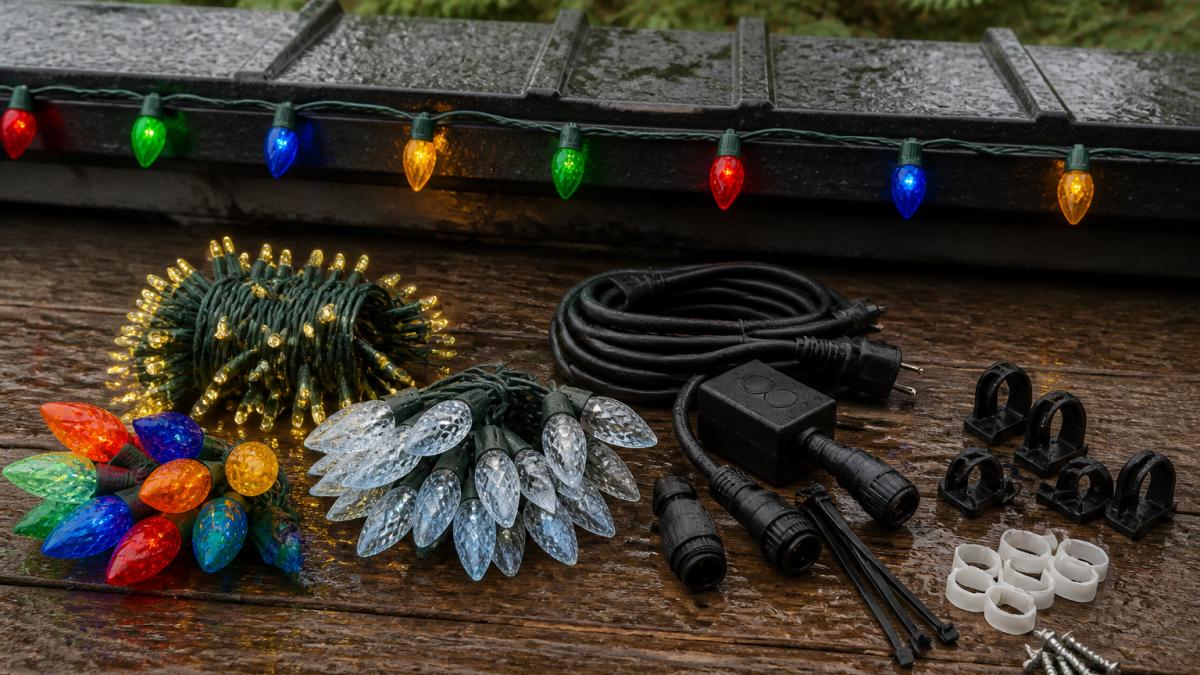
Discover the best weather resistant Christmas lights for 2026.
Table of Contents
- What Makes Christmas Lights Weather Resistant?
- How to Protect Outdoor Light Connections from Snow
- Top Weather Resistant Christmas Lights for 2026
- Installation Tips for Eaves and Rooftops
- Energy Efficiency and Power Consumption
- Smart Home Integration and Repairability
- Frequently Asked Questions
Last Updated: October 2, 2026
What Makes Christmas Lights Weather Resistant?
Weather-resistant Christmas lights are strings and fixtures built to survive rain, snow, freezing temperatures, and UV exposure without failing or losing brightness. In Canada, that means the housing, seals, wire jacket, and connectors all matter as much as the bulbs themselves.
The single biggest mistake buyers make is assuming "outdoor" on the box means "winter-proof." It doesn't. A light rated for outdoor use may still short out after one freezing-rain cycle if its connectors let moisture in. The rating that actually tells you something is the IP code, which we'll break down next.
We've seen how quickly cheap sets fail once the temperature drops below freezing. That's why this guide focuses on the specs that survive a real Canadian winter, not just a mild December.
IP Ratings: IP65 vs IP67 Christmas Lights
IP65 and IP67 are both weather-resistant ratings, but they protect against different things. IP65 means the fixture is dust-tight and protected against water jets from any direction. IP67 means it can survive full immersion in water up to 1 metre for 30 minutes.
For holiday lighting, here's the practical difference:
- IP65 handles rain, snow, sleet, and hose-downs. This is the realistic minimum for anything mounted on eaves or rooflines.
- IP67 adds protection against temporary submersion. It's the safer pick for ground-level displays, planters, or anywhere snowmelt can pool around a connector.
Most reputable manufacturers publish IP ratings following the IEC 60529 ingress protection standard. If a product doesn't list one, treat that as a red flag. Unrated lights are the leading cause of mid-season failures.
Cold-Weather Cable Flexibility
Standard PVC wire stiffens and cracks below freezing. Once the jacket splits, moisture reaches the copper and the string dies. Cold-weather-rated cable uses a flexible compound that stays pliable at low temperatures, which matters most when you're installing in late November.
How to Protect Outdoor Light Connections from Snow
The fastest way to protect outdoor light connections from snow is to seal every plug and junction so meltwater can't pool inside. Even IP-rated lights fail at the connection point, not the bulb.
A common mistake is leaving connectors lying flat on the roof or ground. Water finds them. Here's how to protect them:
- Point all connectors downward so gravity drains water away
- Wrap exposed plugs with self-sealing silicone tape
- Use dielectric grease on metal contacts before joining
- Elevate any ground-level connections on a small block
- Check seals after the first major snowfall and re-tape if needed
Seasonal maintenance takes about 20 minutes per string and prevents the mid-January outage that ruins a display.
Top Weather Resistant Christmas Lights for 2026
The best weather resistant Christmas lights for 2026 balance a genuine IP rating, cold-weather cable, and a connection system that survives freeze-thaw cycles. The table below compares the main categories on the specs that matter most for a northern climate, followed by a deeper look at each type.
| Category | Best For | Typical IP Rating | Cold-Weather Rated | Replaceable Bulbs | Smart-Ready |
|---|---|---|---|---|---|
| LED string lights | General rooflines and trees | IP65+ | Yes | Some | Some |
| Solar-powered | Gardens and paths | IP65+ | Varies | Rare | Rare |
| Commercial grade | Storefronts and large installs | IP67 | Yes | Yes | Often |
| Permanent eave systems | Year-round architectural outlines | IP67 | Yes | Yes | Yes |
LED String Lights
LED string lights are the default choice for most homes because they run cool, last for years, and draw a fraction of the power of older bulbs. Modern sets with a proper IP65 rating and fused plugs handle winter well. The trade-off is that cheap LEDs still fail at the connector, so buy sets with sealed, molded plugs rather than push-in types.
Solar-Powered Options
Solar-powered lights skip the wiring entirely, which makes them ideal for gardens, walkways, and anywhere you can't reach an outlet. The catch is winter sun. Short days and snow cover cut charging time, so solar sets work best as accent lighting rather than a primary display. Look for panels rated for low-light charging if you want them to hold up through December.
Commercial Grade Outdoor Christmas Lights
Commercial grade outdoor Christmas lights use heavier wire, higher IP ratings, and replaceable bulbs, which makes them the right pick for storefronts and large architectural installs. They cost more upfront but last multiple seasons and can be repaired rather than replaced. For businesses, that reliability is the whole point. The heavier gauge also reduces voltage drop on long runs, which is why commercial sets can cover a full storefront without the dimming you get from consumer strings stretched too far.
Permanent Eave Systems
Permanent eave systems mount a track or channel to the roofline once, then accept interchangeable light modules for each season. Because the wiring and housing stay in place year-round, these systems are built to a higher weatherproofing standard than temporary strings, typically IP67 with sealed connectors and UV-stabilized housings. The trade-off is upfront cost and installation complexity, but for homeowners who reinstall lights every year, the labor savings add up quickly.
Installation Tips for Eaves and Rooftops
Secure installation starts with proper clips and safe ladder practice. Never rely on staples or nails, which pierce the wire jacket and create an instant failure point. Once the jacket is compromised, the IP rating of the bulb is irrelevant, because water enters at the puncture and travels along the copper.
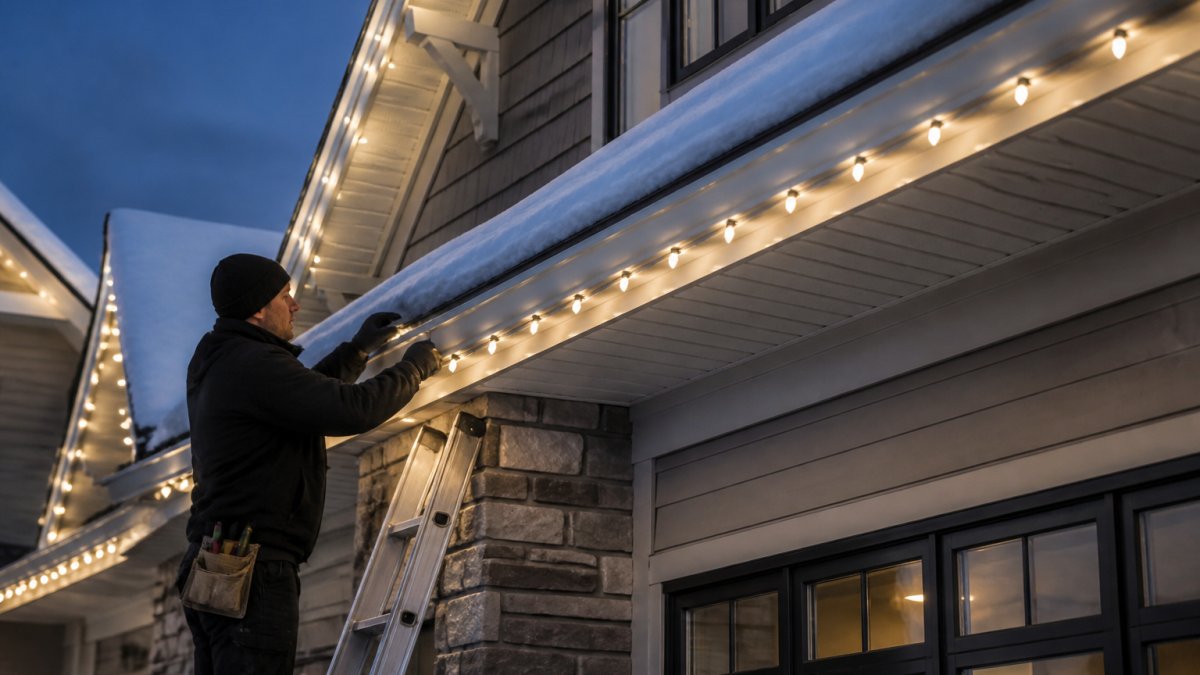
- Map your runs and calculate total length before climbing. Add 10 to 15 percent for sag and turns.
- Use gutter or shingle clips rated for cold weather. Plastic clips that turn brittle below freezing will snap and drop the string.
- Keep each run under the manufacturer's max length to avoid voltage drop. If the far end looks dim, split the run rather than adding a booster.
- Connect to a GFCI-protected outdoor outlet. This is the single most important safety step for any wet-location display.
- Leave a drip loop at every connection point so water runs off the wire instead of into the plug.
- Point all connectors downward and never let them sit flat on the roof or ground where meltwater can pool.
Cold-Weather Installation Timing
Installation temperature affects both the wire and the clips. A common pattern is to install on a mild day in late November rather than waiting for the first deep freeze, because PVC and even some cold-rated jackets are stiffer at -20°C than at 0°C. If you must install in deep cold, let the string warm indoors for an hour before uncoiling it, and avoid sharp bends at the connectors, which is where cold-stressed jackets crack first.
Voltage Drop and Run Length
Voltage drop is the quiet killer of long runs. It happens because the resistance of the wire itself consumes voltage over distance, so the bulbs at the far end receive less power and dim. Thinner wire and longer runs both increase the effect. If the lights at the far end look dim, your run is too long or your wire gauge is too thin.
Safety Considerations for Outdoor Displays
Beyond GFCI protection, keep a few practical rules in mind. Don't overload a single circuit; add up the wattage of every string on the run and stay within the circuit's capacity. Use outdoor-rated extension cords only, and keep all connections off the ground. Check the display after the first major snowfall and again after any ice storm, since ice can pull clips loose and open a connection to moisture.
Energy Efficiency and Power Consumption
LED lights use far less power than incandescent, which matters when a display runs six hours a night for six weeks. A timer or smart plug cuts consumption further by eliminating daylight burn.
Smart Home Integration and Repairability
Smart home integration lets you control brightness, color temperature, and schedules from an app, often with warm white, cool white, and multi-color options in one string. If you're not tech-savvy, start with a simple timer and add app control later.
Frequently Asked Questions
What IP rating should outdoor Christmas lights have for Canadian winters?
For Canadian winters, choose lights with an IP rating of at least IP65, which means they are dust-tight and protected against water jets. IP67 offers even better protection, allowing for temporary immersion. This ensures the lights can withstand snow, ice, and rain without failing.
Are LED Christmas lights better for cold weather than incandescent?
Yes, LED lights are more energy-efficient and perform better in cold temperatures. Unlike incandescent bulbs that can become brittle and fail in extreme cold, LEDs are solid-state and maintain their brightness and color even in sub-zero conditions, making them ideal for Canadian winters.
How do I prevent moisture damage in outdoor Christmas light connections?
To protect connections from snow and moisture, use waterproof connectors or wrap them with electrical tape and place them in a waterproof box. Ensure plugs are elevated off the ground and use dielectric grease on the contacts to prevent corrosion. This simple step can extend the life of your lights significantly.
Can permanent exterior lighting withstand freezing temperatures?
Yes, permanent exterior lighting systems are designed to withstand freezing temperatures when properly installed. Look for lights with cold-weather-rated cables that remain flexible in extreme cold, and ensure all connections are sealed. Many permanent systems come with warranties that cover performance in harsh conditions.
A display that fails in January means climbing a ladder in the cold to fix what should have lasted. StarLites Permanet Lights Inc. builds permanent lighting systems designed for exactly this problem, with cold-weather-rated cable, sealed connections, and app-controlled color options that hold up season after season. Get started with StarLites Permanet Lights Inc. and install a display you won't have to redo every winter.