Permanent Holiday Lighting Installation Cost Guide 2026
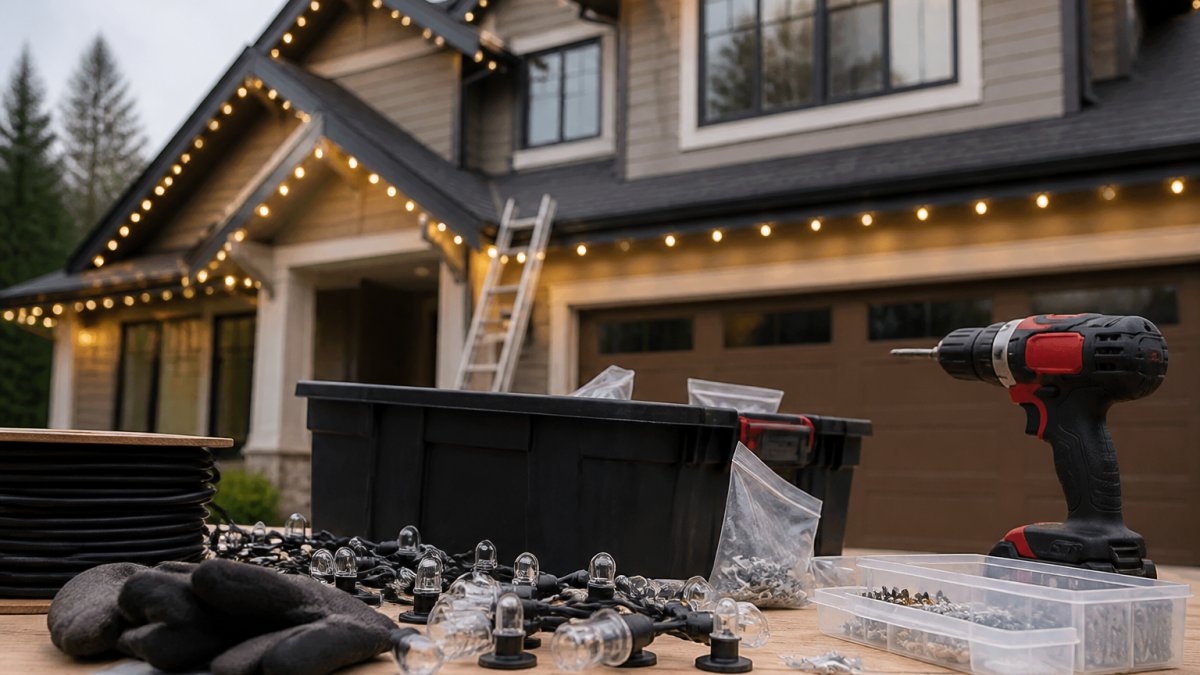
Permanent holiday lighting installation cost explained for 2026. Compare DIY kits vs professional installs, per-foot pricing, and maintenance fees.
Table of Contents
- What Drives Permanent Holiday Lighting Installation Cost in 2026
- Permanent Christmas Lights Cost: What Homeowners Actually Pay
- Permanent Holiday Lighting Cost: A Worked Example
- Permanent Holiday Lighting Pros and Cons Before You Commit
- Permanent Christmas Lights Maintenance Cost and Ownership Terms
- How to Compare Installation Quotes Apples to Apples
- Frequently Asked Questions
Last Updated: October 4, 2026
What Drives Permanent Holiday Lighting Installation Cost in 2026
Permanent holiday lighting installation cost is the total of materials, professional labor, and system hardware required to mount a year-round, app-controlled LED track along your roofline.
Two variables decide most of the number: your roofline length and who does the work. Everything else, from channel color to controller brand, is a smaller adjustment.
The Two Pricing Models: DIY Kits vs Professional Installation
DIY kits shift the labor to you and the risk to your ladder. A typical kit ships with pre-assembled aluminum track, LED nodes, a controller, and mounting clips. You supply the time, the tools, and the nerve to work at height.
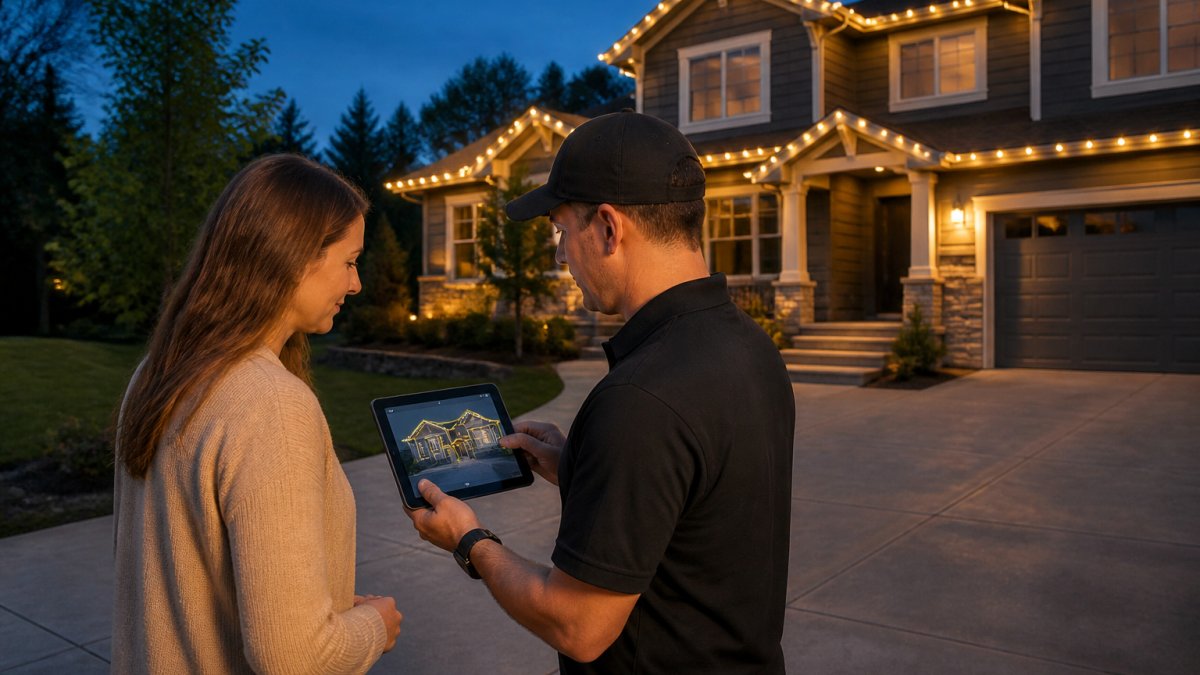
Professional installation bundles design, mounting, wiring, and warranty into one price. The trade-off is straightforward: you pay more upfront and skip the weekend on the roof.
| Model | What You Pay For | Who Owns the Risk | Best For |
|---|---|---|---|
| DIY kit | Hardware only | Homeowner | Confident installers, simple single-storey runs |
| Professional install | Hardware + design + labor + warranty | Installer | Two-storey homes, complex rooflines, businesses |
How Roofline Length Sets Your Baseline Quote
Installers measure your roofline in linear feet, not by house size. A compact bungalow with a wraparound soffit can carry a longer run than a larger home with a simple gable.
That is why two neighbours with similar houses can receive very different quotes. The run length, not the square footage, drives the baseline. Ask any installer to show you the measured linear footage before they price anything.
Permanent Christmas Lights Cost: What Homeowners Actually Pay
Permanent Christmas lights cost depends on run length, installation complexity, and system features, so no single figure applies to every home. Professional installers quote per linear foot; DIY kits are priced per kit or per metre of track. Regional pricing and market rates vary, which is why a quote from one province rarely matches another.
What matters is what sits inside the number. A professional quote should cover:
- Track and mounting hardware rated for freeze-thaw cycles
- LED nodes with replaceable segments
- Controller and power supply
What a Per-Foot Quote Actually Includes
A per-foot rate is not a single product price, it is a bundle. Most installers fold five cost lines into that number, and the split between them is where quotes quietly diverge:
| Line item | What it covers | Why it moves the rate |
|---|---|---|
| Track and channel | Aluminum extrusion, end caps, connectors | Gauge and finish; powder-coated or custom-color track costs more |
| LED nodes and wiring | Diodes, spacing, lead cable | Node spacing (e.g., tighter pitch) raises node count per foot |
| Controller and power | App controller, power supply, injection points | Longer runs need more power injection and larger supplies |
| Labor and access | Installer time, lift or ladder setup, roof work | Pitch, height, and obstructions drive hours per foot |
| Warranty and service | Coverage period, replacement parts, call-outs | Longer warranty terms are priced into the rate |
When you compare two per-foot quotes, ask which of these five lines is included and which is billed separately. A lower rate often excludes access equipment, power injection, or the controller.
A Transparent, Itemized Sample Quote
Because access and pitch change the labor line, no honest installer publishes a universal rate. What we can show is the structure of an itemized quote so you can see how a per-foot figure is built. The example below uses placeholder rates, substitute your own installer's numbers:
| Line item | Basis | Example entry |
|---|---|---|
| Measured roofline | Linear feet | 200 ft |
| Track and channel | Per linear foot | $X / ft |
| LED nodes and wiring | Per linear foot | $X / ft |
| Controller and power supply | Per unit | $X each |
| Power injection points | Per point | $X each |
| Labor | Per linear foot or per hour | $X / ft |
| Access equipment (lift/scaffold) | Per day | $X / day |
| Permits or electrical assessment | Per job | $X |
| Applicable taxes | Percentage | Your provincial rate |
Ask every installer to fill in the same rows. When the line items match, the real differences, node spacing, warranty length, access method, surface immediately.
Lifetime Cost of Ownership, Not Just Upfront Price
The headline quote is only year one. A permanent system's real cost is spread across its life, and the categories that matter are consistent:
- Purchase and installation, the upfront quote.
- Electricity, LED track systems draw relatively little, but the total depends on run length, brightness, and hours of nightly use. Estimate it as: (watts per foot × total feet ÷ 1,000) × hours used × your electricity rate.
- Repairs and replacement parts, replaceable segments cost far less over time than sealed runs that must be swapped whole.
Run the same five categories for a DIY kit and a professional install. The DIY kit wins on purchase price; the professional install usually wins on repairs, service, and warranty. Which one is cheaper over ten years depends on how many seasons you would otherwise buy, hang, and replace seasonal strings.
Compare quotes on lifetime cost, not sticker price. A higher upfront quote with replaceable segments and a transferable warranty can cost less to own than a cheaper sealed system.
Permanent Holiday Lighting Cost: A Worked Example
The cost to install permanent holiday lighting depends entirely on the model you choose, so we will walk through what a 200-foot run actually includes. Sixty-one metres of roofline is a substantial residential project, roughly a large two-storey home with a wraparound section.
How to Measure Your Roofline Before You Get Quotes
Installers price linear feet, not square footage, so measure first. A practical method:
- Sketch your home's outline from the street or from a satellite view.
- Break the roofline into straight segments (front gable, side run, wraparound soffit).
- Measure each segment's length in feet and add them together.
- Add 10-15% for corners, rises, and waste.
- Note obstructions, dormers, chimneys, downspouts, second-storey setbacks, because each adds labor.
Calculator inputs to have ready: total linear feet, number of storeys, roof pitch, and whether the run is continuous or broken by gables. Those four inputs let an installer give you a meaningful range instead of a guess.
A 200-Foot Run, Line by Line
Here is how a 200-foot run breaks down by component. The dollar column uses placeholder rates so you can see the structure, replace them with your installer's actual figures:
| Component | DIY Kit | Professional Installation |
|---|---|---|
| Track and nodes | Included in kit | $X / ft × 200 ft |
| Controller and power | Included in kit | $X per unit |
| Mounting clips and hardware | Included in kit | Included in quote |
| Labor and roof access | Your time | $X / ft + access equipment |
| Power injection points | Usually not included | $X per point |
| Warranty | Manufacturer only | Installer-backed |
| Applicable taxes | On kit price | On full quote |
The honest answer: we cannot publish a per-foot rate that applies to your home, because access, pitch, and obstructions change the labor line. Request a measured quote and compare the linear footage, not the headline number.
Electrical Use and Operating Cost for a 200-Foot Run
Operating cost is the line most quotes omit. LED track systems are efficient, but a 200-foot run still draws power. Estimate it with this formula:
Annual electricity cost = (watts per foot × 200 ÷ 1,000) × hours per night × nights per year × your electricity rate
Worked example with placeholder inputs:
- Watts per foot: use your system's spec (LED track is typically low-wattage per foot).
- Hours per night: 5
- Nights per year: 120 (a typical holiday season plus occasional year-round use)
Plug in your own numbers, the point is that operating cost is calculable, not mysterious. A system used only during the holiday season costs far less to run than one left on nightly year-round.
Safety, Permits, and Installation Constraints
Before you approve any work, confirm:
- Working at height, two-storey runs and steep pitches require fall protection and, often, lift or scaffold access. According to Electrical safety guidance for outdoor lighting, outdoor electrical connections must be rated for wet locations.
- Electrical requirements, older homes may need a circuit check; outdoor connections must be rated for wet locations.
- Roof and fascia materials, some surfaces (e.g., certain metal or composite fascias) need specific mounting methods.
For the wider context on how these systems are regulated and installed, Electrical safety guidance for outdoor lighting and Canadian Electrical Code adoption by province are worth reading before you approve any work.
Permanent Holiday Lighting Pros and Cons Before You Commit
Permanent holiday lighting pros and cons come down to upfront cost versus lifetime ownership. You pay more on day one and stop buying, storing, hanging, and replacing strings every November.
The pros:
- One installation, year-round use
- No seasonal storage or ladder work
- App-controlled color and scheduling
The cons:
- Higher upfront cost than seasonal strings
- Requires a permanent mounting track on your fascia
- Electrical capacity may need checking on older homes
The break-even point is not about one holiday season. It is about how many years you would otherwise buy, hang, and replace seasonal strings. Owners who decorate every year tend to reach it faster.
Permanent Christmas Lights Maintenance Cost and Ownership Terms
Permanent Christmas lights maintenance cost is usually minimal, but ownership terms decide how minimal. A system with replaceable LED segments and a written warranty costs less to own than one where a single failed node means a new run.
Ask three questions before you sign:
- What does the warranty cover, and for how long?
- Can individual segments be replaced, or is the run sealed?
- What happens if you move or want to change the design?
That last question matters more than most buyers expect. A permanent system is an asset on the house, not a disposable decoration.
How to Compare Installation Quotes Apples to Apples
Comparing installation quotes apples to apples means normalizing every line before you decide. Most quotes look similar at the top and diverge in the details.
Build a comparison sheet with these rows:
- Measured linear footage
- Track material and gauge
- LED node count and spacing
For the wider context on how these systems are regulated and installed, Electrical safety guidance for outdoor lighting and Canadian Electrical Code adoption by province are worth reading before you approve any work. For a broader view of how permanent systems are marketed and sold, Consumer product safety guidance covers the claims you should verify.
Frequently Asked Questions
Is permanent holiday lighting worth it?
It depends on how many seasons you plan to decorate. A permanent system is installed once and stays up year-round, so you avoid the annual cost of buying, hanging, and replacing seasonal strings. If you decorate every year and dislike climbing ladders in cold weather, the upfront spend spreads across many seasons. If you only light up occasionally, a removable setup may suit you better.
How much do permanent outdoor holiday lights cost?
Permanent holiday lighting installation cost depends on roofline length, system features, and whether you choose a DIY kit or a professional service. Per-foot pricing is the standard way installers quote, and total project cost rises with custom installation work, taller rooflines, and smart controls.
What factors affect the cost of permanent holiday lighting installation?
The biggest drivers are linear footage of track needed, roofline height and pitch, installation complexity such as gables and dormers, materials and light quality, and system features like app control and colour customization. Regional market rates and whether you use an authorized installer or a DIY kit also shift the price. Get a written cost estimate that itemizes each of these.
How much does permanent holiday lighting cost to maintain?
Maintenance is usually the smallest line in your budget. LED lights have long lifespans, so most owners spend little beyond occasional cleaning and the rare replacement of a failed section. Professional service plans, if you choose one, add a predictable annual fee. Ask any installer what warranty and service terms are included before you sign.
The challenge with permanent holiday lighting installation cost is not finding a number. It is finding a quote you can trust line by line. StarLites Permanet Lights Inc. builds every quote from a measured roofline, priced hardware, and clear ownership terms, so you know exactly what you are paying for before the first clip goes up. Get started with StarLites Permanet Lights Inc. and light your home once, properly. https://StarLites.com