Professional Grade Holiday Lighting Benefits
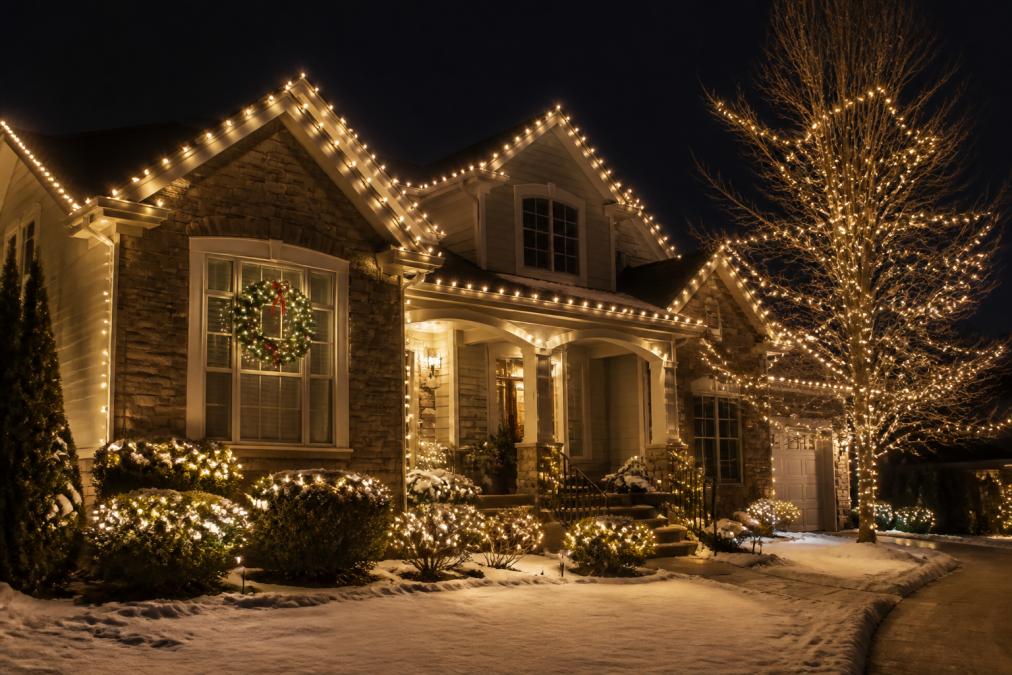
Explore the professional grade holiday lighting benefits: commercial-grade durability, energy efficiency, smart controls, and turnkey installation. Get.
Table of Contents
- Why Professional Grade Holiday Lighting Beats Retail Options
- Commercial Grade LED Christmas Lights: Technical Specifications That Matter
- Permanent Holiday Lighting Cost: What You Are Actually Paying For
- Holiday Lighting Installation Safety Standards and Liability Reduction
- Smart Controls, Programmable Patterns, and Custom Design Flexibility
- Storage and Off-Season Care for Permanent Lighting Systems
- Conclusion: Making the Switch to Professional Grade Holiday Lighting
- Frequently Asked Questions
Last Updated: September 20, 2026
Why Professional Grade Holiday Lighting Beats Retail Options
Professional grade holiday lighting is a permanent, commercial-grade system engineered to survive winter weather and deliver consistent brightness year after year, unlike boxed retail sets built for one or two seasons. The gap between retail and professional grade holiday lighting benefits comes down to engineering, not marketing.
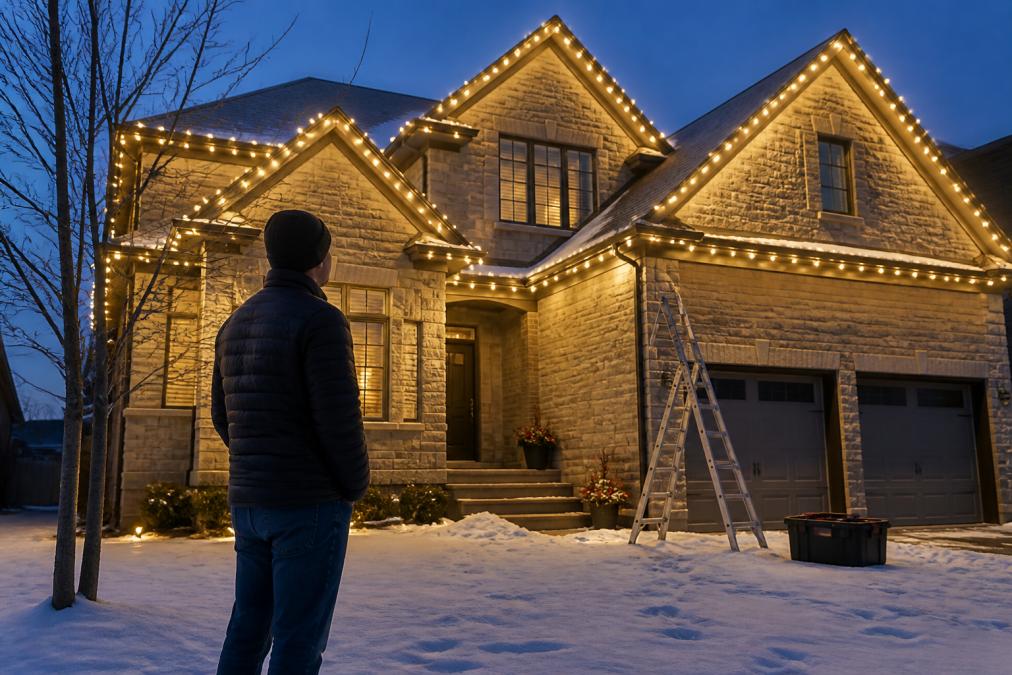
Sealed Construction and Weather Resistance for Winter Conditions
Sealed construction separates a system that lasts a decade from one that lasts a season. Commercial-grade LED Christmas lights use molded, moisture-protected connections that keep water and debris out of the circuit, while retail plugs and sockets are open to the elements.
The practical difference shows up fast:
- Sealed connectors resist ice buildup and corrosion
- Weather-resistant housings handle temperature swings without cracking
- Debris resistance keeps sockets clear through wind and snow
The Real Cost of Annual Replacement vs. One-Time Investment
Annual replacement is the hidden cost nobody calculates: new retail sets every year plus your time untangling and reinstalling them. A permanent system is a one-time investment with replacement cost savings over its lifespan.
Commercial Grade LED Christmas Lights: Technical Specifications That Matter
Commercial grade LED Christmas lights are built to higher electrical and durability standards than retail equivalents, with thicker wire, sealed housings, and LED diodes rated for extended use. Here is what the numbers on a spec sheet actually mean for a system that has to sit on your roofline through freeze-thaw cycles, ice loading, and wind.
Wire Gauge (AWG): Why Thicker Copper Matters in the Cold
Wire gauge is measured in AWG, and lower numbers mean thicker copper. Retail string sets typically use very thin conductors, often 20-22 AWG, because they are designed to be cheap, light, and used indoors or for a single short season. Commercial-grade runs commonly use 18 AWG or thicker depending on run length and load.
Why that matters in a cold climate:
- Voltage drop. Thin wire loses voltage over distance, which is why the far end of a cheap retail run looks dimmer and warmer than the first few feet. Thicker copper carries voltage further, so the last bulb on a long roofline run matches the first.
- Current capacity. Heavier gauge handles more current per run, which means fewer separate plug-in points and less daisy-chaining of undersized extensions.
- Cold-weather flexibility. Insulation on commercial cable is formulated to stay flexible at low temperatures rather than becoming brittle and cracking when it is bent during a January repair.
IP Ratings: What Ingress Protection Actually Tells You
IP ratings use a two-digit code from the IEC 60529 standard: the first digit covers solids, the second covers liquids. For outdoor holiday lighting, the second digit decides whether a system survives a wet snow event.
- IP44, protected against solid objects over 1 mm and water splashing from any direction. Adequate for sheltered locations, marginal for exposed rooflines.
- IP65, dust-tight and protected against water projected from a nozzle. This is the practical minimum most professionals target for exposed outdoor connections.
- IP67, dust-tight and protected against temporary immersion. Common on higher-end sealed connectors and inline splices.
- IP68, dust-tight and protected against continuous immersion. Usually overkill for roofline lighting, but it appears on some submersible-grade components.
LED Technology, Energy Efficiency, and Electricity Savings
LED technology is the core of the energy efficiency story. LEDs draw a fraction of the power of incandescent bulbs and produce almost no heat, which matters when running a large roofline display for six weeks. Lower heat also means less thermal stress on connector seals, extending the life of the assembly.
Brightness, Color Consistency, and Architectural Lighting Quality
Permanent Holiday Lighting Cost: What You Are Actually Paying For
Permanent holiday lighting cost reflects engineering, installation, and long-term reliability, not just the lights themselves. Comparing pricing to a hardware store set means comparing two different products; evaluate total cost over several seasons, not the sticker price on a single box.
What you are actually paying for:
- Commercial-grade components rated for outdoor exposure, with sealed connectors and heavier wire
- Non-damaging installation that protects your roofline, fascia, and siding
- Turnkey service, including design, layout, and setup
- Smart controls and programmable patterns
- A system you can keep using year after year, with service support when something needs attention
A Five-Year Cost Comparison: DIY Retail vs. Professional Grade
The table below is a framework, not a quote. Your numbers depend on roofline length, design complexity, and how much work you would otherwise do yourself. The point is to show which cost categories people forget to count.
Cost category | DIY retail sets (annual) | Professional permanent system |
|---|---|---|
Hardware purchase | New retail sets every year or two | One-time system cost |
Replacement bulbs and sections | Ongoing, unpredictable | Covered by warranty and service |
Your time (shopping, untangling, installing, removing) | Several weekends per season | None after install |
Ladder and safety risk | Carried by you | Carried by the installer |
Roof, gutter, or fascia repair from clips and staples | Occasional, often unplanned | Designed to avoid |
Storage | Boxes, bins, garage space | None, hardware stays mounted |
Electricity | Comparable (both LED) | Comparable (both LED) |
Disposal of failed sets | Annual e-waste | Minimal |
How to Estimate Your Own Break-Even Point
A simple way to frame it: add up what you spend on retail sets over a season, plus a reasonable value for the hours spent shopping, untangling, installing, and taking them down. Multiply by the seasons you expect to keep doing it, then compare that figure to a quoted permanent system.
Long-Term ROI and Replacement Cost Savings
The long-term ROI calculation is straightforward once you stop treating lighting as a yearly expense. Add up replacements, your time, and the occasional damaged gutter or fascia from a bad install; a permanent system spreads that cost across many seasons.
Holiday Lighting Installation Safety Standards and Liability Reduction
Holiday lighting installation safety standards exist because ladders, live wiring, and winter conditions are a genuinely risky combination. Professional installation removes that risk from your plate.
Insurance and Warranty Implications of Professional Installation
Insurance and warranty implications are the part most guides skip. A DIY install that damages your roof or causes an electrical fault can complicate a home insurance claim. Professional installation with proper documentation keeps your coverage clean and your warranty intact.
Smart Controls, Programmable Patterns, and Custom Design Flexibility
Smart controls turn a static display into something you actually enjoy adjusting. Programmable patterns let you shift colors and scenes from an app, and custom design flexibility means the system adapts to your home or storefront rather than the other way around.
Storage and Off-Season Care for Permanent Lighting Systems
Storage is a non-issue with permanent systems, because the hardware stays mounted year-round. Off-season care is minimal: a quick visual check in spring, and you're done. No untangling, no box in the garage, no reinstallation come November.
Compare the two approaches directly:
Factor | Retail Sets | Professional Permanent System |
|---|---|---|
Lifespan | One to two seasons | Many seasons |
Weather resistance | Open connections | Sealed, moisture-protected |
Installation | DIY, ladder risk | Professional, non-damaging |
Controls | None or basic | Smart, programmable |
Annual effort | Reinstall every year | None |
Replacement costs | Recurring | One-time investment |
Conclusion: Making the Switch to Professional Grade Holiday Lighting
The real challenge with holiday lighting isn't picking a color. It's choosing a system that survives winter, looks sharp, and stops costing you every season. Professional grade holiday lighting benefits come down to durability, safety, and time you get back.
Frequently Asked Questions
Is permanent holiday lighting worth the investment?
Permanent holiday lighting typically pays for itself over several seasons. Commercial-grade LEDs last 50,000 hours or more, compared to 2,000 to 5,000 hours for retail strings that often fail after one or two winters. You also avoid annual installation fees, replacement costs, and the safety risk of climbing ladders. For homeowners and businesses that decorate every year, the long-term savings and convenience make it a practical choice.
What are the key differences between professional grade and retail holiday lights?
Professional grade holiday lighting uses sealed, commercial-grade LED components designed to handle rain, snow, and temperature swings. Retail lights use thinner wiring, unsealed connections, and lower-grade LEDs that corrode or fail in cold weather. Professional systems also support smart controls, programmable patterns, and custom design layouts, while retail options are limited to fixed colors and lengths.
Are professional grade holiday lights more energy efficient?
Yes. Commercial-grade LED Christmas lights use roughly 75 to 90 percent less electricity than incandescent bulbs. A typical 100-foot run of LED lights draws about 10 to 20 watts, while the same length in incandescent draws 100 to 200 watts. Over a six-week season, that difference shows up clearly on your electricity bill, especially for larger roofline or storefront displays.
How do professional installers handle safety and liability during installation?
Professional installers typically follow Canadian electrical safety standards, use non-damaging gutter clips and mounting hardware, and ensure all outdoor connections are properly sealed and grounded. They also commonly carry liability insurance and offer warranties on both materials and workmanship. This protects you from injury risk, electrical hazards, and property damage, and it may satisfy your home insurance provider's requirements for outdoor lighting installations.