Professional Holiday Lighting Installation Services: 2026 Guide
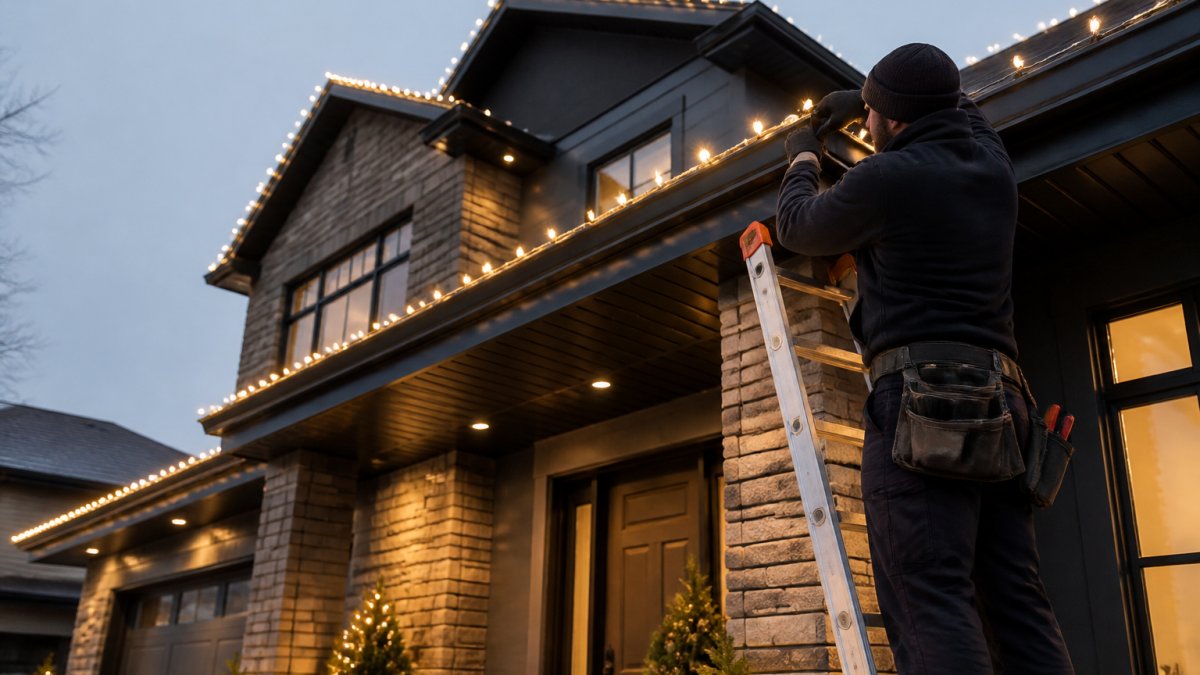
Explore professional holiday lighting installation services.
Table of Contents
- What Professional Holiday Lighting Installation Services Offer
- Holiday Light Installation Cost: What Affects Your Pricing
- Residential vs. Commercial Holiday Lighting Installation
- Professional Christmas Light Installers: What to Look For
- Outdoor Holiday Lighting Installation: Design and Setup
- Holiday Light Installation and Removal: Seasonal Service Cycles
- Maintenance, Storage, and Year-Round Care
- Frequently Asked Questions
Last Updated: October 9, 2026
What Professional Holiday Lighting Installation Services Offer
Professional holiday lighting installation services transform homes and businesses with expertly designed, fully managed solutions. Installers handle every step: design consultation, equipment selection, installation, seasonal maintenance, and complete takedown and storage.
We know holiday lighting installation requires more than stringing lights across a roofline. It demands technical knowledge of electrical safety, weather-resistant materials, and design. Installers assess your property's architecture, discuss your vision, and recommend solutions balancing aesthetics with durability and safety.
Core services include design and site assessment, installation with professional-grade equipment, seasonal maintenance and repairs, holiday light removal, and secure storage. Professional installation saves time, eliminates safety risks, and delivers results that far exceed DIY attempts.
Holiday Light Installation Cost: What Affects Your Pricing
Most holiday lighting companies quote on one of three models, and knowing which you are offered matters more than the headline number.
- Flat-rate, all-inclusive. One price covers design, materials, installation, in-season maintenance, takedown, and storage. Easiest to budget, but you pay for services you may not use.
- Per-linear-foot of roofline. Common for roofline-only work. The rate typically bundles the light strand, clips, extension cords, and labor, so a longer roofline scales predictably.
- Materials plus labor, itemized. You see the cost of each strand, connector, timer, and hour of labor. Best for custom designs, but harder to compare between providers unless the scope is identical.
Whichever model you are quoted, ask what is included and what triggers a change order. These line items move a quote the most.
Roofline length and number of runs. The single biggest driver. A single-story home with one continuous run costs far less than a two-story home with multiple gables, dormers, and separate circuits, since each break adds connectors, cord, and labor.
Access and height. A walkable low pitch can be installed from a ladder. Steep pitches, upper-story rooflines, tile or metal roofing, and obstructions like chimneys or skylights require fall protection, roof anchors, and sometimes a lift. Access often separates a base quote from a premium one.
Tree, shrub, and ground features. Wrapping a mature tree is priced by trunk diameter and canopy height, not by the tree. A large deciduous tree can take several times longer than the entire roofline.
Design complexity. Static single-color runs are the least expensive. Adding color-changing or app-controlled fixtures, synchronized zones, or animated sequences increases both material cost and programming time.
Materials and ownership. The term most homeowners overlook. Some companies rent you the lights, you never own them, and they return at takedown. Others sell you the strands and store them between seasons. Rented systems cost less upfront and include bulb replacement; purchased systems cost more initially but the same strands are reused yearly, lowering effective cost over a multi-year contract.
Included services. Confirm whether the quote includes mid-season maintenance, bulb replacement, takedown, and storage, or bills each separately. A low installation quote with add-ons can cost more than an all-inclusive one.
Timing. Booking in September or early October typically costs less than a rush booking in late November, when crews are fully committed and premium scheduling applies.
To compare quotes fairly, give every provider the same brief: same roofline, features, and service window. Ask each whether lights are rented or purchased, the in-season repair response time, and what happens to equipment at season's end. A quote you can line up against another beats the lowest number.
Residential vs. Commercial Holiday Lighting Installation
Residential and commercial holiday lighting installation serve different purposes and face distinct requirements.
Residential installations prioritize curb appeal and personal aesthetic. Homeowners want properties that stand out while remaining welcoming and tasteful, focusing on rooflines, entryways, pathway lighting, and accents that highlight architectural details.
Commercial installations emphasize brand visibility and customer experience. Retail storefronts, office buildings, and hospitality venues use holiday lighting to attract foot traffic and reinforce brand identity. Designs often include larger-scale displays, synchronized effects, and integrated signage, balancing visual impact with professional appearance and municipal lighting codes.
Maintenance and removal timelines also differ. Residential customers typically want lights installed mid-November and removed by early January. Commercial properties sometimes extend displays through February or integrate permanent architectural lighting. Installers design systems accordingly.
Professional Christmas Light Installers: What to Look For
Holiday lighting work combines two risk categories: working at height and working with electricity. A provider who cannot show how they manage both is a liability risk. Use this checklist before signing.
Liability insurance and proof of coverage. Ask for a certificate of insurance showing current commercial general liability coverage, and confirm it is active by calling the broker listed. If a worker is injured or a fixture damages your roof or eavestrough, the installer's policy, not your homeowner policy, should respond first.
Worker coverage. In Canada, workers' compensation is administered provincially. Ask the installer for a clearance letter or account in good standing with the applicable provincial authority. An installer who cannot produce one may use uncovered labor, exposing you to claims.
Business registration. A legitimate operator can provide a business number and, where required, a municipal business licence. Ask for both and verify the licence with the issuing municipality.
Electrical safety. Most residential holiday lighting runs on low-voltage or standard 120-volt circuits and needs no permit, but new permanent outdoor outlets, dedicated circuits, or hardwired connections do. Confirm who performs that work and that they are a licensed electrical contractor where required. For products sold or used in Canada, look for a recognized certification mark on lights, cords, and power supplies. Uncertified imports commonly cause outdoor electrical failures.
Fall protection and ladder safety. Ask how crews are protected on steep or high rooflines. Reputable installers use roof anchors, harnesses, and stable ladders, and never send a single worker onto a steep pitch without fall protection. Provincial occupational health and safety rules govern this work; a provider who cannot describe their method is a warning sign.
References and completed work. Ask for two or three recent local addresses you can drive past, ideally from last season so you can see how the design held up. Ask specifically about multi-story or steep-roof projects, which reveal whether a crew is genuinely equipped.
Warranty and in-season response. Get the workmanship warranty in writing, including length and coverage. Ask the response time if a section goes dark in December, whether bulb replacement is included, and who pays if installation damages roofing, siding, or eavestrough. A provider who will not put a response time in writing is telling you something.
Ownership and end-of-season terms. Confirm whether the lights are rented or purchased, who owns them, what happens if a strand fails mid-season, and whether takedown and storage are included or billed separately.
Red flags. No certificate of insurance, no workers' compensation clearance, no written quote, cash-only payment with no receipt, pressure to decide on the spot, and no local references are all reasons to walk away.
Outdoor Holiday Lighting Installation: Design and Setup
Outdoor holiday lighting installation begins with design that considers your property's architecture, landscape, and aesthetic preferences. Designers assess sight lines, evaluate existing structures, and recommend placements that maximize visual impact.
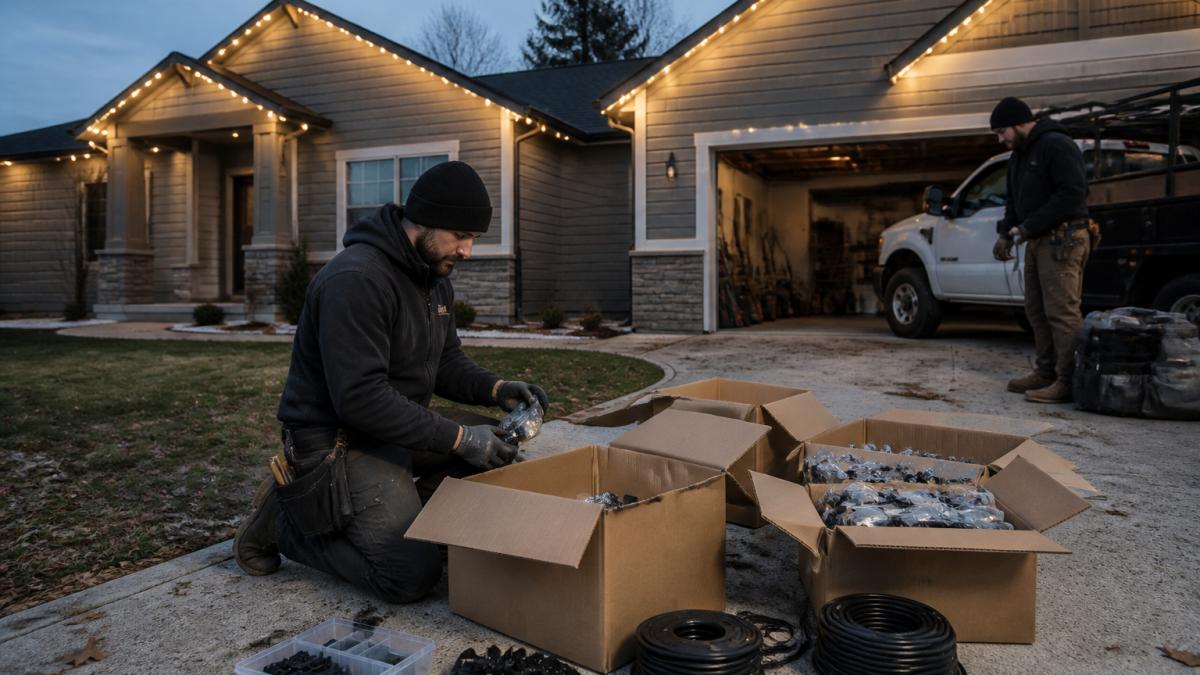
Installation requires technical precision and safety awareness. Installers map light placement, run weatherproof electrical lines, and secure fixtures with hardware rated for winter. Professional-grade work uses commercial connectors, reinforced clips, and materials built to withstand freeze-thaw cycles and heavy snow loads.
Setup typically takes one to three days depending on scope. Installers test all connections before leaving and provide guidance on seasonal care: when to check connections, how to clear snow buildup, and what to do if lights malfunction.
Professional installation handles the technical complexity: you avoid purchasing equipment, troubleshooting electrical issues, and working at heights. Installers also create balanced designs that enhance your property's character rather than overwhelm it.
Holiday Light Installation and Removal: Seasonal Service Cycles
Holiday light installation and removal are distinct phases of the seasonal lighting cycle. Understanding this timeline helps you plan and budget.
Installation typically begins in mid-October and continues through November, with most projects done before Thanksgiving. Early installation ensures your display is ready for the full season and allows time for adjustments or repairs.
The maintenance phase runs from late November through late December. Installers conduct periodic checks, replace burned-out bulbs, repair weather-related damage, and keep connections secure, preventing partial outages or unsafe electrical conditions.
Removal and takedown occur in early January. Teams remove all lighting, disconnect electrical lines, and prepare equipment for storage, eliminating the physical demands and safety risks of DIY takedown on steep roofs or complex installations.
Prompt removal prevents winter weather damage and returns your property to normal appearance, while proper storage protects your equipment until next season.
| Phase | Typical Timing | Key Activities |
|---|---|---|
| Installation | Mid-October to November | Design, setup, testing, adjustments |
| Maintenance | Late November to December | Inspections, repairs, bulb replacement |
| Removal | Early January | Takedown, disconnection, storage prep |
Maintenance, Storage, and Year-Round Care
Proper maintenance and storage extend the life of your holiday lighting system and ensure reliable performance year after year. Professional maintenance during the season catches problems early before they become safety hazards or create unsightly outages.
Seasonal maintenance includes regular inspections for loose connections, damaged insulation, or corroded components. Professional installers check weatherproof seals, verify that clips and fasteners remain secure, and test electrical connections. They replace burned-out bulbs promptly and address any weather-related damage from ice buildup or wind.
After the season ends, proper storage protects your lighting investment. Professional storage involves carefully removing lights, coiling electrical cords to prevent damage, and storing everything in climate-controlled conditions. Organized storage makes reinstallation faster and easier the following year, installers know exactly what equipment you have and where it's located.
StarLites Permanet Lights Inc. offers comprehensive storage solutions that take this responsibility off your shoulders. We handle removal, organization, and secure storage, then reinstall your system the following season with minimal disruption to your property.
Year-round care also means protecting your lighting equipment during off-season months. Proper storage prevents weather damage, pest intrusion, and component degradation. When spring arrives, your system is ready for inspection and any necessary repairs before the next holiday season begins.
Professional holiday lighting installation services deliver convenience, safety, and stunning visual results that DIY approaches struggle to match. From initial design through seasonal removal and storage, professional installers handle every detail with expertise and care.
Frequently Asked Questions
How much does professional holiday light installation cost?
Professional holiday lighting installation pricing depends on several factors: the size of your space, the complexity of your custom design, the type and quantity of LED lights or bulbs, installation labor, and whether you need removal and storage services. Costs vary based on roofline length, architectural features, and regional service areas. Contact StarLites for a free quote tailored to your specific needs and design vision.
Do professional Christmas light installers provide the lights, or do I need to buy them separately?
Most professional Christmas light installers, including those offering full-service installation, provide high-quality LED lights and bulbs as part of their service. This ensures your display uses reliable, weather-resistant products designed to withstand cold temperatures and winter conditions. StarLites provides premium lighting solutions, eliminating the guesswork of purchasing hardware separately.
Will permanent holiday lighting installation hold up through a Canadian winter?
Professional permanent holiday lighting systems are engineered to withstand harsh winter conditions, including freezing temperatures, snow load, and ice buildup. Quality installations use durable clips, weatherproof wiring, and commercial-grade LED bulbs rated for outdoor use. Regular maintenance during the season, such as clearing snow and checking connections, helps ensure reliability. StarLites' permanent installations are designed for durability.
When should I book a professional holiday lighting installation?
Book your professional holiday lighting installation in early fall (September to October) to secure your preferred installation dates before the busy season. Most installers fill their schedules quickly as the holidays approach. Early booking also allows time for custom design consultations and ensures your display is ready before December events and gatherings.